Regenerative futures: rhizomatic thinking and architecture
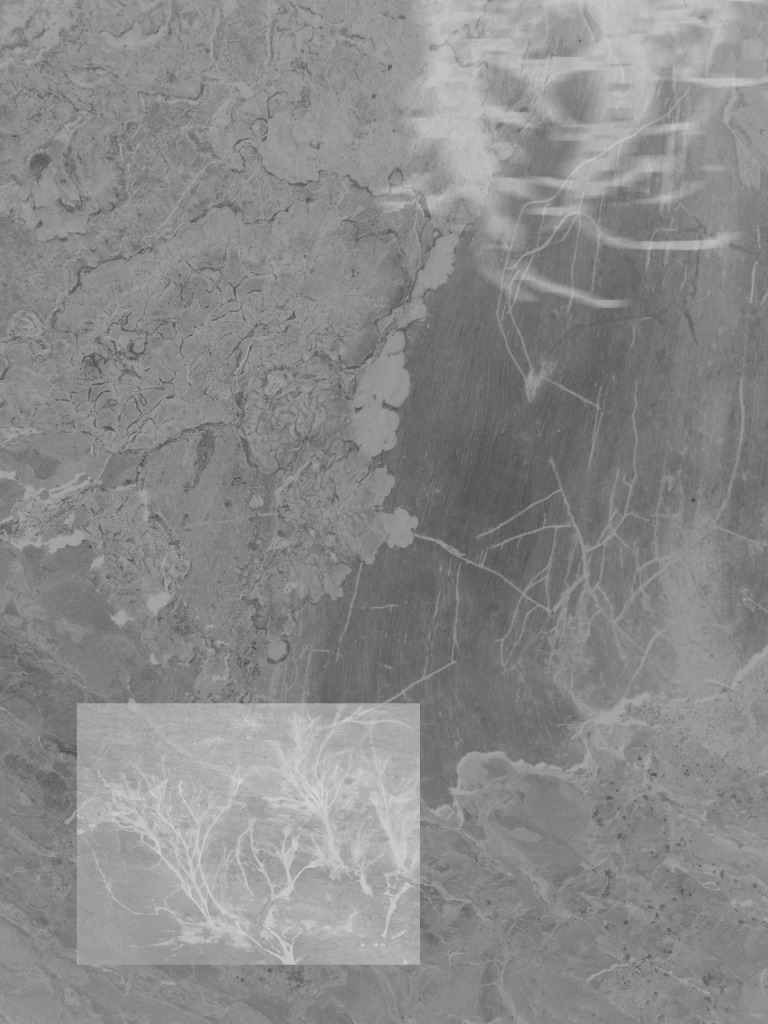
During the first week of October the event series Regenative Futures – Rhizomatic thinking and architecture will focus on Rhizomatic structures and how they relate to change and loss.
The event consists of two parts:
Part I: 1-3/10 Lectures, talks, screenings in Otaniemi and Helsinki
Part II: 4-5/10 A visit and case study on Isosaari
You can find the events website here.
Theme
Rhizomes are horizontally growing structures. For example fungae mycelium has a rhizomatic growing priciple. Rhizomatic thinking is a term widely known through the writings by the French philosophers Gilles Deleuze and Felix Guattari. As they presented the core of this tool is to examine and learn from non-hierarchical systems of rhizomatic networks by recognizing connectivity, diversity and symbiosis. The ideas of rhizome- like connectivity however are something that has always existed in various worldviews and thinking systems. However the current capitalistic system based on competition, exploitation and extractivism does not function according to these principles. We want to recognize different ways of understanding what rhizomatic structures could mean also outside the Eurocentric academia. We aim to listen and learn.
In our program we want to examine how abstract ideas and ideologies are transformed into physical realities. In addition to studying rhizomatic thinking as a theory we aim to follow it’s principles in the way we build the program in the events. The program will touch on topics such as growth dependent cities, biodiversity loss, care and our relationship to the more-than-human world.
In October 2024 we focus on how rhizomatic thinking relates to change and loss.
1.10.2024 Starting from rhizomatic thinking and architecture
Location: Kudos pavilion, Aalto University / Online
17.15 Pontus Purokuru / Deleuze, Guattari and the their idea of Rhizome
Purokuru’s talk will introduce Deleuze and Guattari’s concept of the rhizome, examine its role in rethinking non-hierarchical and interconnected structures and its impact on fields such as cultural studies and sociology. The talk will also address some common misconceptions and offer a critical reflection on the use of the rhizome as a popular metaphor from digital networks to creative industries. Finally, while the rhizome has been celebrated as a model for open and fluid systems, it has also been be co-opted by capitalist forces and institutions of control. Using the concept does not guarantee freedom from competition or hierarchy. How to navigate this contradiction in practice and thought
18.15 Sanna Lehtinen / Transgenerational aesthetics in the beyond-human world
Sanna’s research focuses on the intersection of urban environmental aesthetics, philosophy of the city, and philosophy of technology. The talk is about our understanding of the deep intricacies of the ecosystemic level that supports the human lifeform has been compromised by grave uncertainties in recent years. We are much more in connection and dependent on nature beyond ourselves than what has been traditionally implied by the design and planning of cities and other human environments according to human-centred ideas of quality. In this talk I outline an idea of a transgenerational aesthetics that can take scientific and non-scientific approaches in environmental aesthetics further, into imagining and reimagining what it means to thrive in a more caring way.
19.15 Elina Koivisto / Care oriend design collaborating with the fungi (screening)
Elina Koivisto is an architect and doctoral researcher at Aalto Arts. She will approach the theme of the event through her current project Kudos – Library for Material Relations. Kudos is an exploration into different caring relations in architecture. It is an example of how architecture could act as a tool for forming bonds between humans, as well as between humans and the more-than-human nature. It offers its visitors a chance to experience a space built together with other living beings and to simultaneously re-evaluate the material relations in our built environment in general. The project frames architecture as an ever becoming and evolving process rather than an object frozen in time and place.
The event is a place for alternative education and peer learning. We welcome students from all educational backgrounds to join the event to critically study what it means to build regenerative futures. We aim to challenge traditional education that lacks opportunity to question the cultural norms and learn to recognize the rhizomatic and entangled nature of the field. We hope to open a discussion also outside the architecture community and invite different perspectives
2.10.2024 Relating to crisis
Location: Suvilahti/Online
17:15 Emel Tuupainen / Post growth cities and the issue of economic inequality in ecological transition and sustainable planning.
Emel Tuupainen is an architect driven by the contradictions of individual and regional inequality in the context of sustainable spatial planning, its economic drivers and alternatives. In the lecture Tuupainen concentrates on the role of economic inequality as one of the main obstacles in ecological transition and sustainable planning. What could be the alternative economic approach and how does it change the planning process? They are working on their PhD about ”Economic norms in eco-social spatial change” in Tampere university. Their research is funded by Nessling foundation since the beginning of 2024.
18.00 Julia Nueno, Forensic architecture: Spatial techniques and Open-Source Methods of investigation of the ongoing Istrael apartheid in Gaza
Forensic Architecture is a multidisciplinary research group at Goldsmiths, that uses spatial analysis and digital modeling to reconstruct incidents of violence and human rights abuses by states, corporations and reactionary forces (..) Julia Nueno, PhD Fellow at Forensic Architecture, will present the spatial analysis techniques and digital tools that have been developed over the past year to respond to ongoing Nakba in Gaza. These methods have been used to investigate the manipulation and misinformation of the Israeli military, to study the expansion of the medium of warfare and the enviromental damage caused by military campaign, and to identify military patterns aimed at bringing about the physical destruction of Palestinian living conditions.
18:30 Oranssi, From squatting to youth cultural center and non profit housing provider
Introduction to Oranssi’s work, organization and history. How did a squat transform itself to non profit housing provider for the youth?
3.10.2024 Rhizomatic organising and scale
Location: Kääntöpöytä
18:00 Emilia Laine / Rethinking built environment for holobionts
Emilia Laine is a doctoral researcher in sociology at the University of Helsinki. Combining approaches from science and technology studies and the social studies of microbes, her dissertation project follows the microbial in the emergence of a novel food economy called cellular agriculture.
The rise of metagenomics since the early 2000s has accelerated a paradigm shift in biology known as the symbiotic turn. Instead of emphasizing competition as the driving force of evolution, the symbiotic perspective emphasizes how life has evolved in close and long-term relationships between different species. Consequently, the understanding of humans as mere individuals is dissolving due to the mounting evidence that our bodies are largely made up of microbial ’foreign’ entities. This talk seeks to connect the microbial and the social in the context of architecture. It asks how we should rethink our approaches to the built environment if we are indeed holobionts, beings that are inseparably entangled with microbes.
18:30 Eero Yli-Vakkuri, SUMUD / Dark infra of solidarity action
Eero Yli-Vakkuri is a recovering survivalist and a performance artist, whose work focuses on public spaces. In the past he made annoying street interventions which made people uncomfortable, presently he is advancing sustainable design through campaigns, workshops and artistic presentations. He prefers to work in groups and to develop antidisciplinary collaborations with specialists from different fields.
19:00 Experimental dinner w/ Jonas Palekas
Jonas Palekas is a chef and food artist specializing in performative dinners, experimental food design methodologies, speculations about food futures, advocacy of ecological relations, and microbiological activism.
4.-6.10.2024 How rhizomatic structures relate to loss?
Location: Isosaari
The collective visited Isosaari during August 2021.
Then we said: The island of Isosaari offers a framework for communal experimentation and critical reflection upon the fundamental phenomena of contemporary settlement. Through the rituals of arrival, settlement, engagement and departure we aim to become aware of what we bring to the island, what we experience at the island and what we leave when we depart. How does Isosaari’s reality affect us and how does our various realities affect the island?
This time: Since winter 2023-2024 the water infra connected to Isosaari got damaged and public transportation was cut. As we are interested how rhizomatic structures relate to loss and change we would like to know how the island is doing and how our relationalities collide. As a collective we organize a series of events around Rhizomatic thinking and architecture. The collective consists of people who got to know each other through the network of EASA (European Architecture Students Assembly). The assembly has been founded on the values of alternative education and awareness around hierachies within the field of architecture. With our work we want to wider explore and define what this means in the current age of the ecologigal catastrophe we witness and actively take part in. We aim to challenge traditional education that lacks opportunity to question the cultural norms and learn to recognize the rhizomatic and entagled nature of the field. We hope to open a discussion also outside the architecture community and invite different perspectives.
The event is a place for alternative education and peer learning. We welcome students from all educational backgrounds to join the event to critically study what it means to build regenerative futures. We aim to challenge traditional education that lacks opportunity to question the cultural norms and learn to recognize the rhizomatic and entangled nature of the field. We hope to open a discussion also outside the architecture community and invite different perspectives


